The Junior Developer Job Market in 2026: What Actually Gets You Hired Today
Entry-level developer job postings dropped about 20 percent in 2026. Here is the honest picture, plus the three things hiring managers now check first.
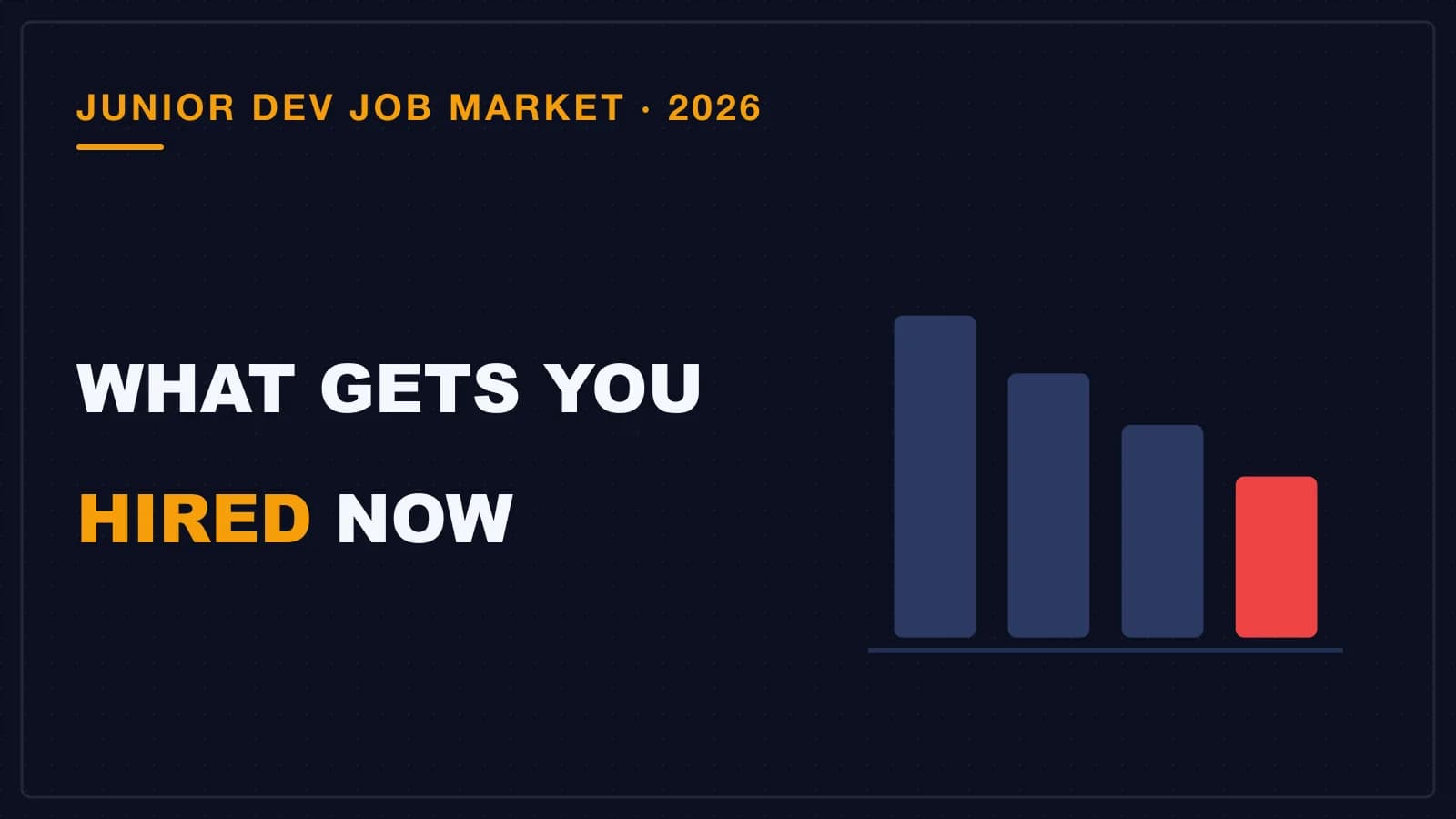
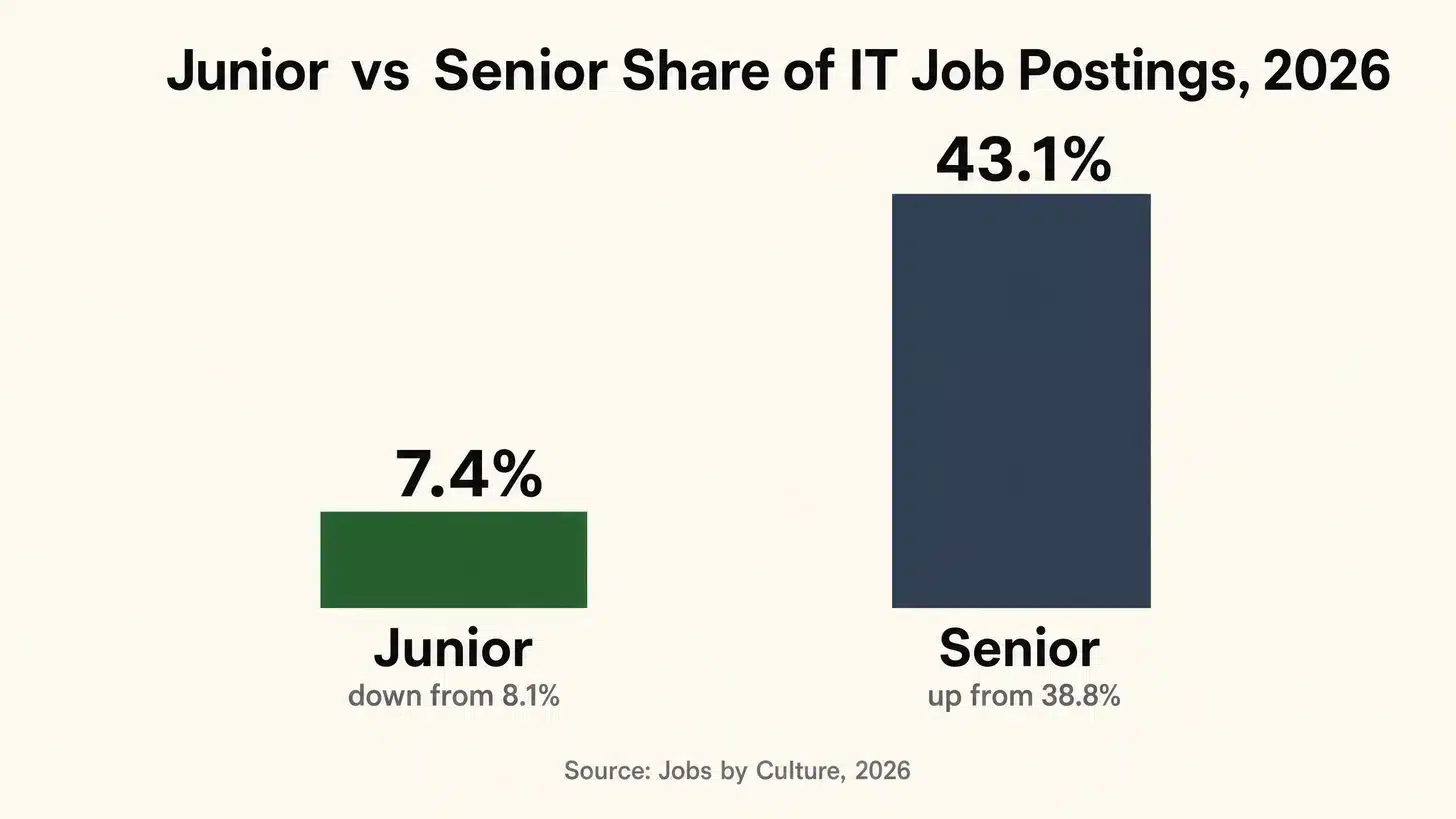
Employment for software developers aged 22 to 25 has fallen nearly 20 percent since late 2022 (Stanford AI Index 2026). In the same period, junior roles fell to just 7.4 percent of all IT job postings, down from 8.1 percent a year earlier (Jobs by Culture, 2026). That is a real drop. I am not going to hide the hard parts. But I read those numbers differently from most people, because last month a student of mine with no degree and one good project got two interview calls in a week. The market got harder. It did not close.
This post is for one person: a student or early-career developer who reads scary headlines about the junior developer job market 2026 and wonders if it is too late. It is not too late. But what gets you hired in 2026 is different from 2021. Let me show you what changed and what to do this week.
By the numbers: the 2026 junior market
- Down nearly 20%: employment for developers aged 22 to 25 since late 2022 (Stanford AI Index 2026).
- 7.4% of IT postings: the junior share, down from 8.1% a year before. Senior roles rose from 38.8% to 43.1% (Jobs by Culture, 2026).
- 42% of software job ads now ask for AI skills, up from 8% in 2022 (Jobs by Culture, 2026).
- About 4.5 lakh per year: the average starting pay for a junior developer in India in 2026 (Indeed India).
Junior developer job market 2026: are there still jobs?
Yes. There are fewer of them, and the easy ones are gone.
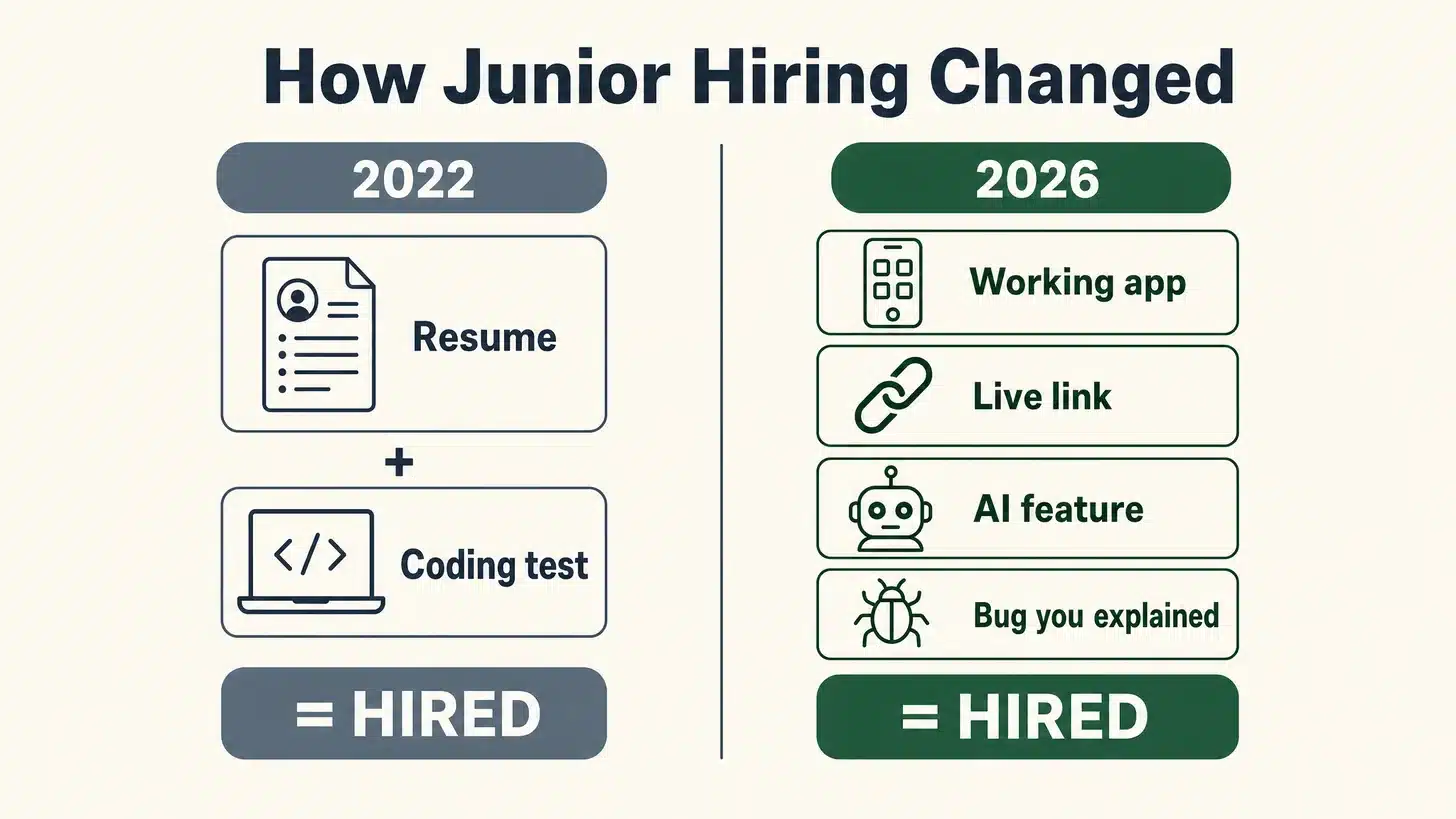
Here is the part the headlines skip. Companies still need people who can build. What shrank is the kind of junior role where you copy a small task, do it slowly, and learn on the job for six months. AI tools now do that slow first-month work in minutes. The Stanford data backs this up: developers aged 31 and older saw their numbers stay flat or grow over the same years developers aged 22 to 25 dropped 20 percent. So the entry-level jobs that survived are the ones where you show value faster.
A short story. In 2022, one of my students got hired mostly on a clean resume and a coding test. In 2026, a student with a weaker resume got hired because she walked in with a working app on her phone and said, “I built this, here is the live link, here is the part that broke and how I fixed it.” Same skill level. Different result. The second student gave the manager proof.
If you are still asking whether learning to code is worth it at all in the AI era, I wrote a full answer here: Is It Worth Learning to Code Now That AI Exists?
What hiring managers actually look for now
They look for proof that you can build and ship, not proof that you finished a course.
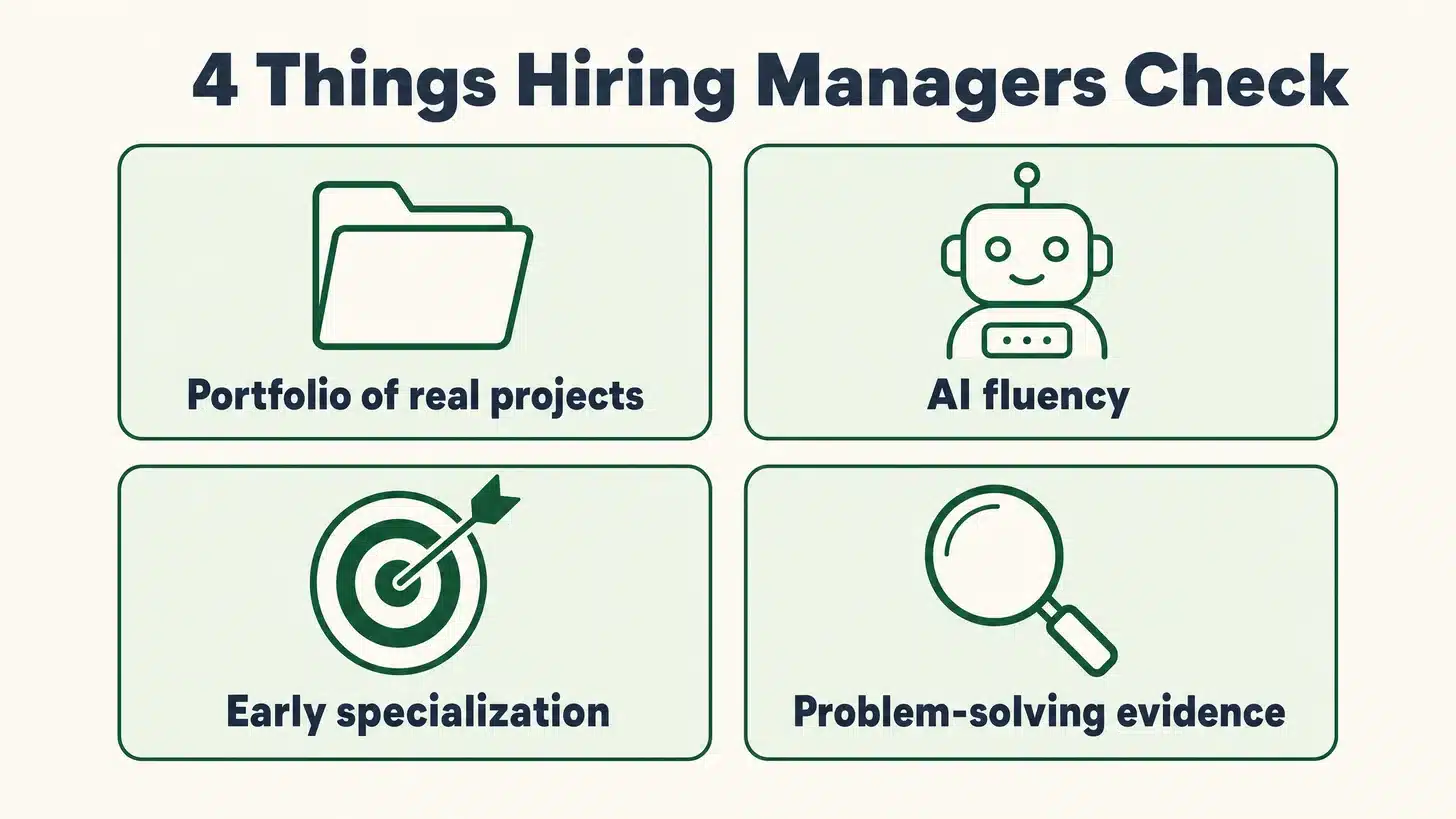
I have talked to four hiring managers in Kolkata and Bangalore over the past year. The same four things came up every time. The numbers from the wider market match what they told me: 42 percent of software job ads now ask for AI skills, up from 8 percent in 2022 (Jobs by Culture, 2026). Here are the four things, with what each one really means.
| What they check | What it means |
|---|---|
| A portfolio of real projects | Two or three apps that actually run, with a live link. At least one that uses an AI feature. |
| AI fluency | You can use AI as a tool to work faster, and you can spot when its answer is wrong. |
| Early specialization | You are clearly better at one area (web, data, mobile) instead of a little of everything. |
| Problem-solving evidence | You can explain a bug you hit and the steps you took to fix it. |
Notice what is missing from that table. No mention of certificates. No mention of how many tutorials you watched. Managers assume you can learn. What they cannot assume is that you can finish something. The market makes this harder for juniors: in one 2026 survey, only 12 percent of firms named junior hiring as a main goal, while 70 percent put senior talent first (FindSkill, 2026). So your proof has to be clear and quick to check.
Portfolios beat certificates, and the reason is boring
A working project answers the one question a certificate cannot: can this person ship something that runs?
A certificate says you sat through lessons. A live app says you handled the messy parts: setup, errors, deploy, the bug at 1 a.m. that no tutorial warned you about. Managers have seen too many people with full certificate lists who freeze when asked to build a small feature from scratch.
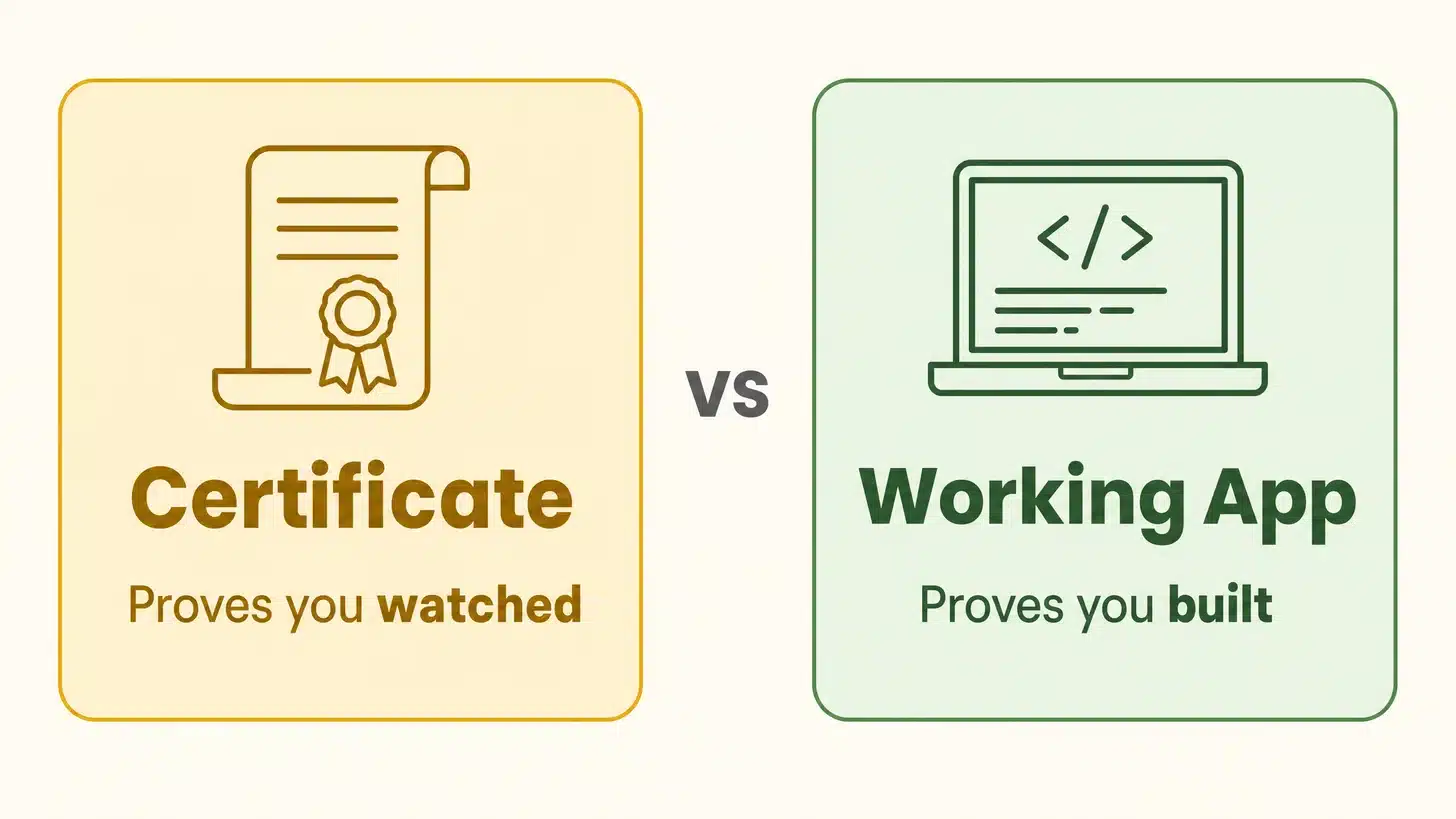
A certificate proves you watched. A working app proves you built.
This does not mean courses are useless. They teach you the basics. But the course is the start, not the finish. The finish is a thing other people can click and use.
What should you build to get hired?
Build two or three small apps that solve a real problem, and make at least one of them use AI in a useful way.
Do not build another to-do list. Managers have seen ten thousand of them. Pick a problem from your own life or your town. Here are starting ideas that are small enough to finish and real enough to talk about:
- A tool that reads your class notes and makes practice questions, using an AI text model.
- A small site for a local shop that takes orders and sends a WhatsApp confirmation.
- An expense tracker that reads a photo of a receipt and fills in the amount.
- A study timer that logs your hours and shows a weekly chart.
When you add an AI feature, the goal is not to look fancy. The goal is to show you can connect to an AI service, send a request, and handle the answer in your own code. A simple call looks like this:
// Send the user's notes to an AI service and get questions back
const res = await fetch("https://api.example-ai.com/v1/generate", {
  method: "POST",
  headers: { "Authorization": `Bearer ${API_KEY}` },
  body: JSON.stringify({
    prompt: `Make 5 quiz questions from: ${notes}`
  })
});
const data = await res.json();
showQuestions(data.questions); // your own code handles the result
That is eight lines, but it shows three skills at once: you can call an outside service, pass data, and use the result. That is exactly the AI fluency managers want to see, and it is the skill behind that 42 percent of job ads.
Show the work, do not just store it
Put each project online with a live link, a short README, and one paragraph on the hardest bug you fixed.
Code sitting on your laptop helps no one. Each project needs three things a manager can check in two minutes:
- A live link, so they can use it without setup.
- A README that says what it does and how to run it.
- A short note: “The hardest part was X. I fixed it by Y.” This is your problem-solving evidence.
That third point matters more than people expect. When you explain a real bug in plain words, you prove you understand your own code. Anyone can paste code from AI. Fewer people can explain why it broke and how they fixed it. If you want to learn faster while you build, the way you study matters too: How to Study a Programming Book Without Skimming It.
How do I pick one area to specialize in?
Pick the area where your finished projects already cluster. If two of your three apps are websites, you are a web developer. Say that out loud on your resume and in interviews. “I build web apps with React and Node, and I add AI features” beats “I know many languages.” A manager hires for a specific seat. Make it easy to see which seat you fit. This matters more now that senior roles are 43.1 percent of postings and juniors are 7.4 percent: the fewer junior seats there are, the more clearly you have to fit one.
Where to start this week
Today, write down one small problem in your own life that code could solve. Just one sentence.
Tomorrow, start building the smallest version of it. Not the full app. The smallest version that runs. Add one AI feature when the basic version works. Put it online by the end of the week, even if it is rough. A rough app with a live link beats a perfect plan that stays in your head.
The junior developer job market 2026 rewards people who finish and show their work. You can be one of them by Sunday. Open a blank file and write that one sentence now.