Highest-Paying Tech Jobs in India (2026 Salary Guide)
What the highest-paying tech jobs in India actually pay in 2026, from GenAI engineers to full-stack and python developers, and how to climb to the next band.
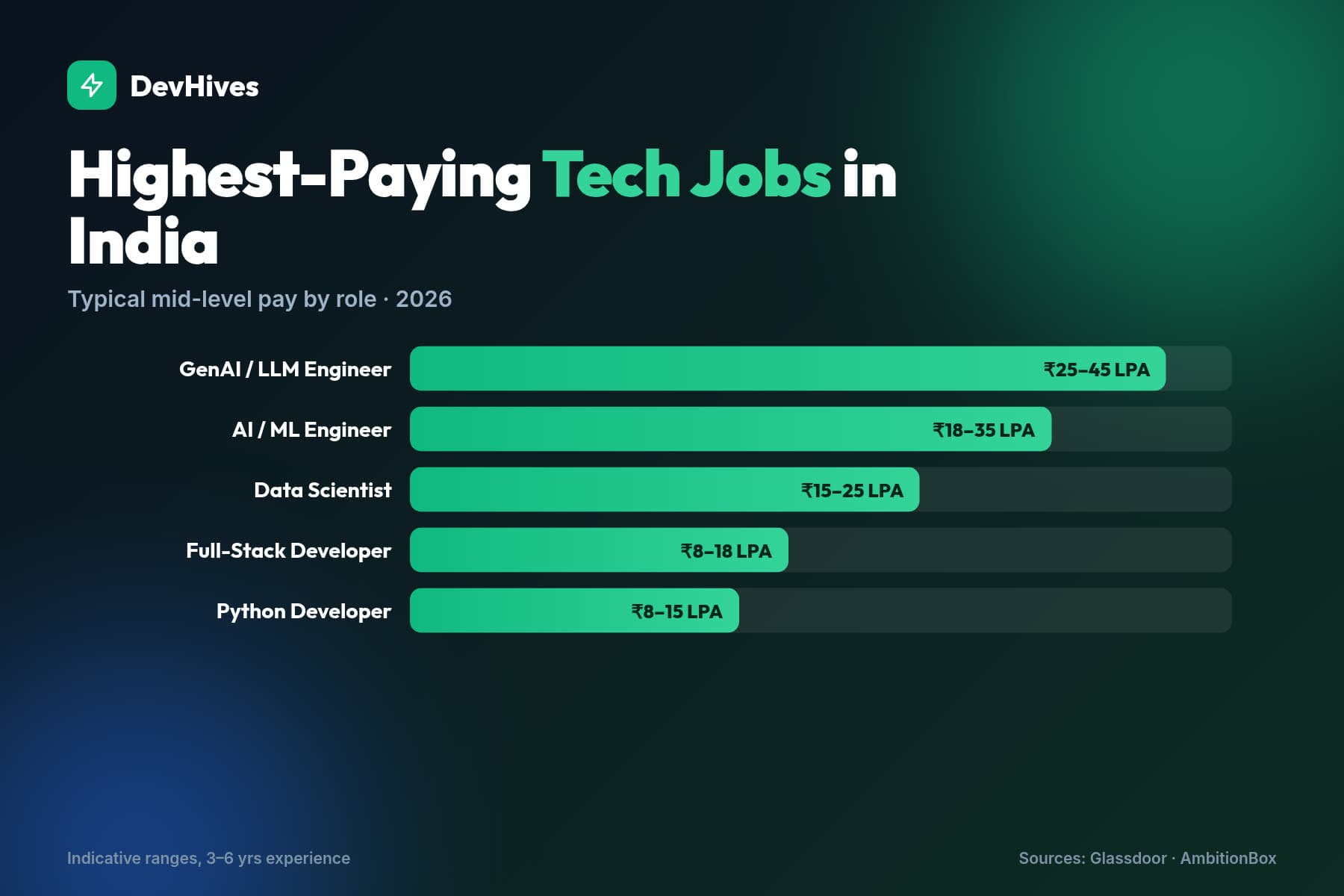
“Which tech jobs actually pay the most in India?” is the question behind almost every course someone signs up for. For 2026 the answer has shifted hard toward artificial intelligence, but the classic developer roles still pay well and hire in far larger numbers. This guide lays out the highest-paying tech jobs in India with real salary ranges, then shows what actually moves you from one band to the next.
One honest caveat up front: salary figures in India vary widely by source, city and company. The numbers below are indicative ranges drawn from self-reported databases like Glassdoor and AmbitionBox plus recruiter reports, not precise averages. Treat them as a map, not a quote.
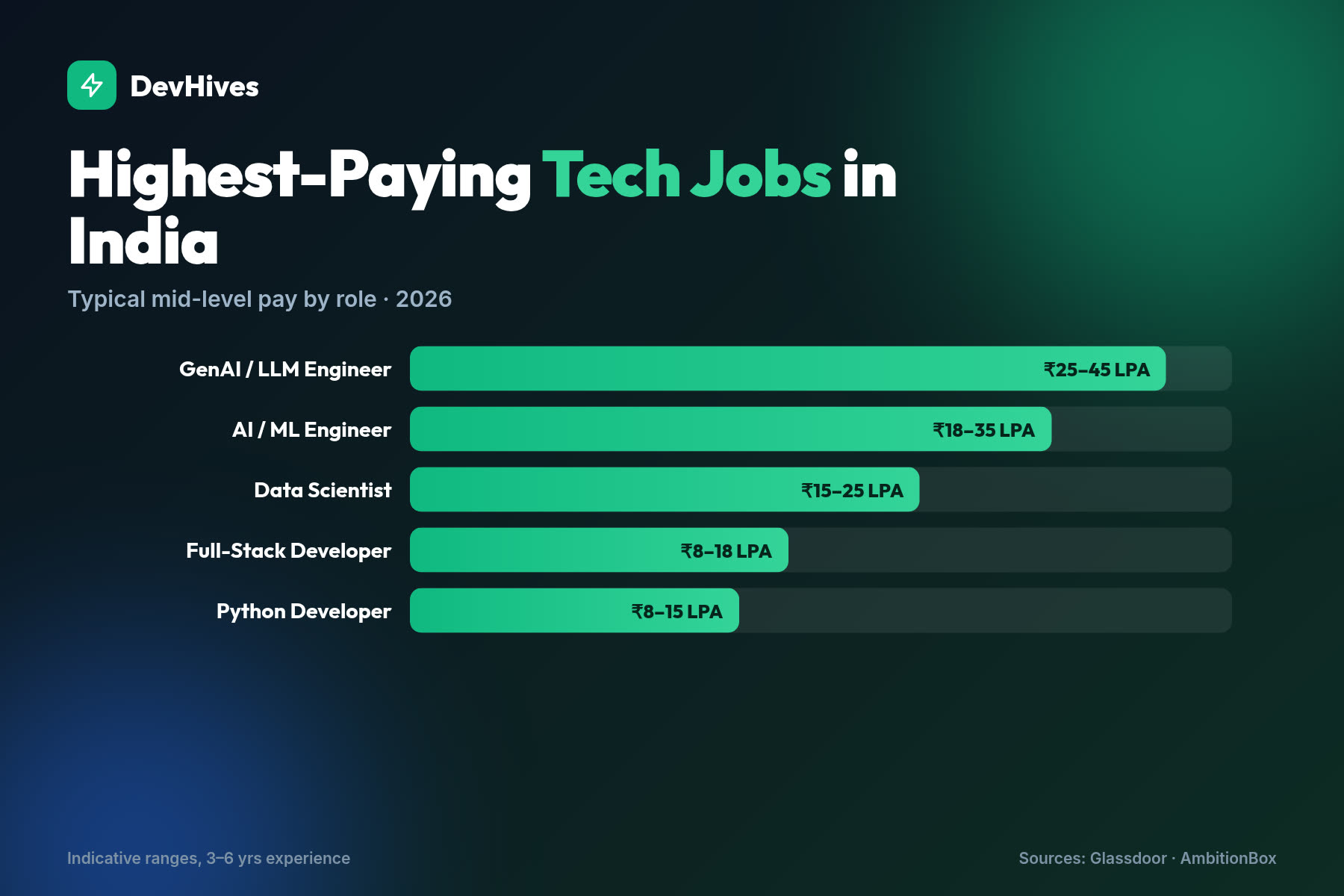
The 2026 salary map
| Role | Entry (0–2 yrs) | Mid (3–6 yrs) | Senior (6+ yrs) |
|---|---|---|---|
| GenAI / LLM Engineer | ₹10–25 LPA | ₹22–45 LPA | ₹50–80 LPA+ |
| AI / ML Engineer | ₹6–15 LPA | ₹18–35 LPA | ₹35–70 LPA |
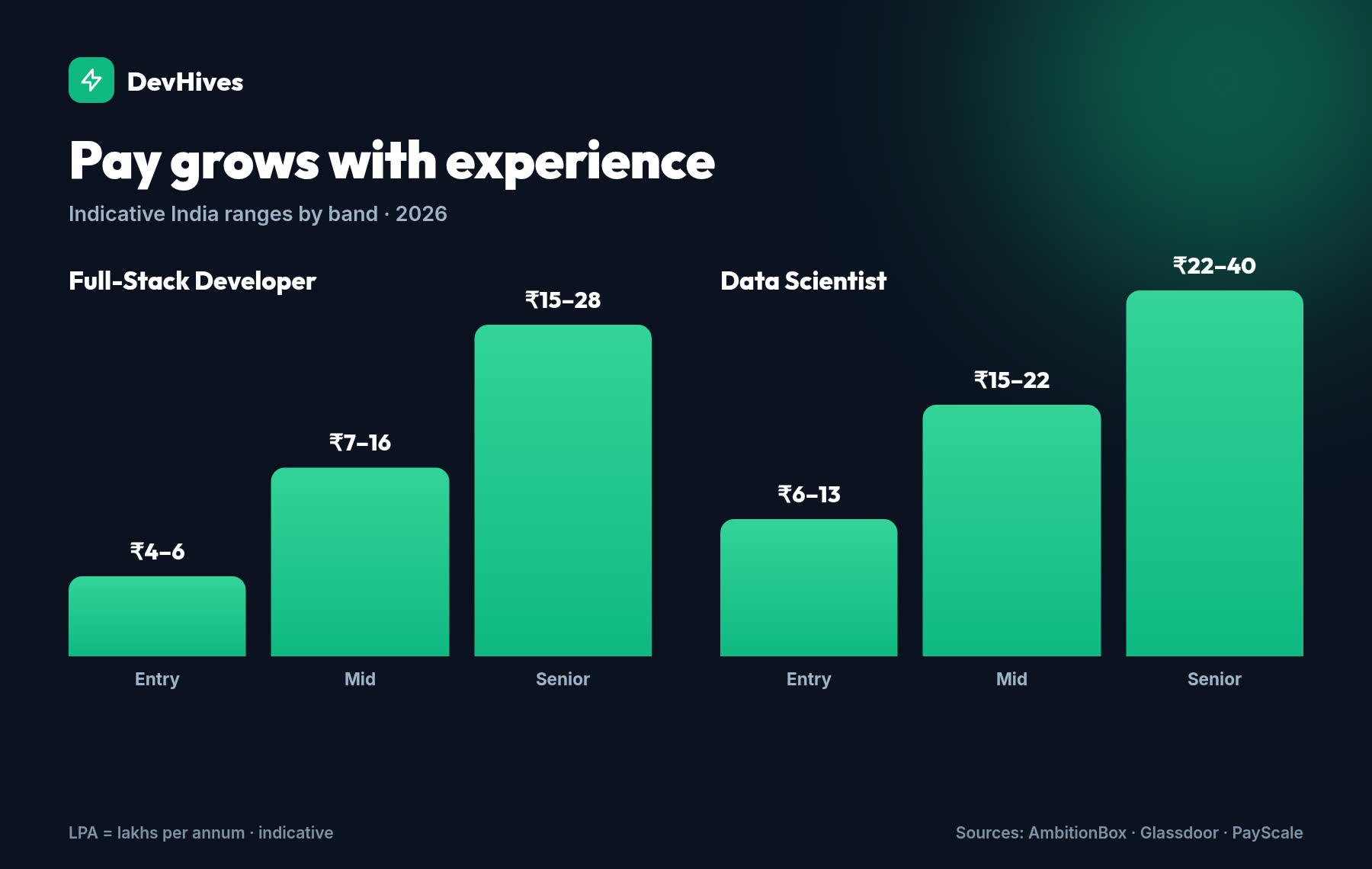
| Data Scientist | ₹6–13 LPA | ₹15–22 LPA | ₹22–40 LPA |
| Full-Stack Developer | ₹4–6 LPA | ₹7–16 LPA | ₹15–28 LPA |
| Python Developer | ₹3–5 LPA | ₹8–15 LPA | ₹15–25 LPA |
The top of the market: AI and GenAI
If you are chasing the highest paying IT jobs in 2026, the answer is some flavour of AI. GenAI and large language model (LLM) engineers sit at the top, because very few people can reliably ship production systems built on these models. Even at fresher level the band starts high, and senior specialists at top labs can reach ₹80 LPA or more.
A role worth calling out by name is the RAG developer. RAG stands for retrieval-augmented generation: wiring an LLM to a company’s own documents so answers are grounded in real data instead of guesses. It is one of the most in-demand GenAI skills right now, and most job posts fold it into “AI engineer” or “GenAI engineer” pay, which is why it earns in the same top band. AI and ML engineers more broadly round out the top tier, with data scientists close behind.
The reliable earners: full-stack, python and data
Not everyone wants to go deep on models, and that is fine, because the volume of hiring still sits in web and application development. Full-stack developer salary in 2026 climbs steadily: modest at entry, comfortable by the mid band, and strong once you own architecture decisions. Full-stack roles also tend to pay a little more than a pure backend role, because you cover more of the stack.
The python developer salary story is similar. Python is the common entry point into the industry, so fresher pay is lower, but it branches into the highest-paid tracks: a python developer who moves into AI follows that curve upward. Data scientists sit a notch above general developers once they have a few years and a portfolio of shipped models.
What actually moves your salary
Three levers decide which end of these ranges you land on.
- Skills, not years. A developer with a scarce, current skill such as GenAI or strong system design out-earns someone with more years but common skills. The highest paying computer science jobs in 2026 reward depth in one area over a shallow spread.
- City and company type. Metro hubs like Bengaluru and Hyderabad pay the most, and product companies generally pay above services firms for the same title.
- Proof of work. Shipped projects and a public portfolio move offers more than a longer CV. Interviewers pay for what you can clearly do.
Freshers vs experienced: where the jump happens
The widest pay gaps are not between roles. They are between experience bands inside the same role. Look again at the table and notice how the senior column often doubles the mid column. That is where planning your first few years pays off.
For a fresher, the goal is not to start on the highest number. It is to start on a track that bends upward fast. A python or full-stack role is a strong launchpad precisely because it opens doors into data and AI, where the senior bands are far higher. Two years of shipping real features in a growing company usually beats two years of a slightly higher starting salary in a role that plateaus.
Those with experience have a different lever: specialisation. Moving from “general backend” to “AI engineer who ships RAG systems” can reset your pay band entirely, because you move from a crowded market into a scarce one. The same is true for cloud architecture and strong system design. Pick one scarce lane, go deep, and let the market reprice you.
Either way, remote and global-facing roles widen the ceiling further, since teams hiring across borders often benchmark pay above the local average.
How to climb a band
The gap between two rows in that table is usually one or two concrete skills plus evidence you can apply them. Pick the track you want, learn the current tools for it, and build two or three real projects that a hiring manager can open and run. That is the fastest honest route from the entry band to the mid band, and from mid to senior. Structured, project-based learning beats passive courses here, which is exactly the kind of path DevHives is built around.
Key takeaways
- AI, GenAI and LLM roles (including RAG developers) are the highest-paying tech jobs in India for 2026.
- Full-stack and python developers earn well and hire in much larger numbers.
- Scarce current skills, the right city and shipped projects decide where in the range you land.
- Salary data varies by source; verify any figure on a primary database like Glassdoor or AmbitionBox.
Related reading
The bottom line
In 2026 the ceiling belongs to AI, GenAI and LLM specialists, while full-stack and python developers remain the dependable core of the industry with plenty of room to grow. Your title sets the floor; your scarce skills and your proof of work set how high above it you go. Figures here are indicative, so confirm the latest on a primary salary database before you negotiate.


