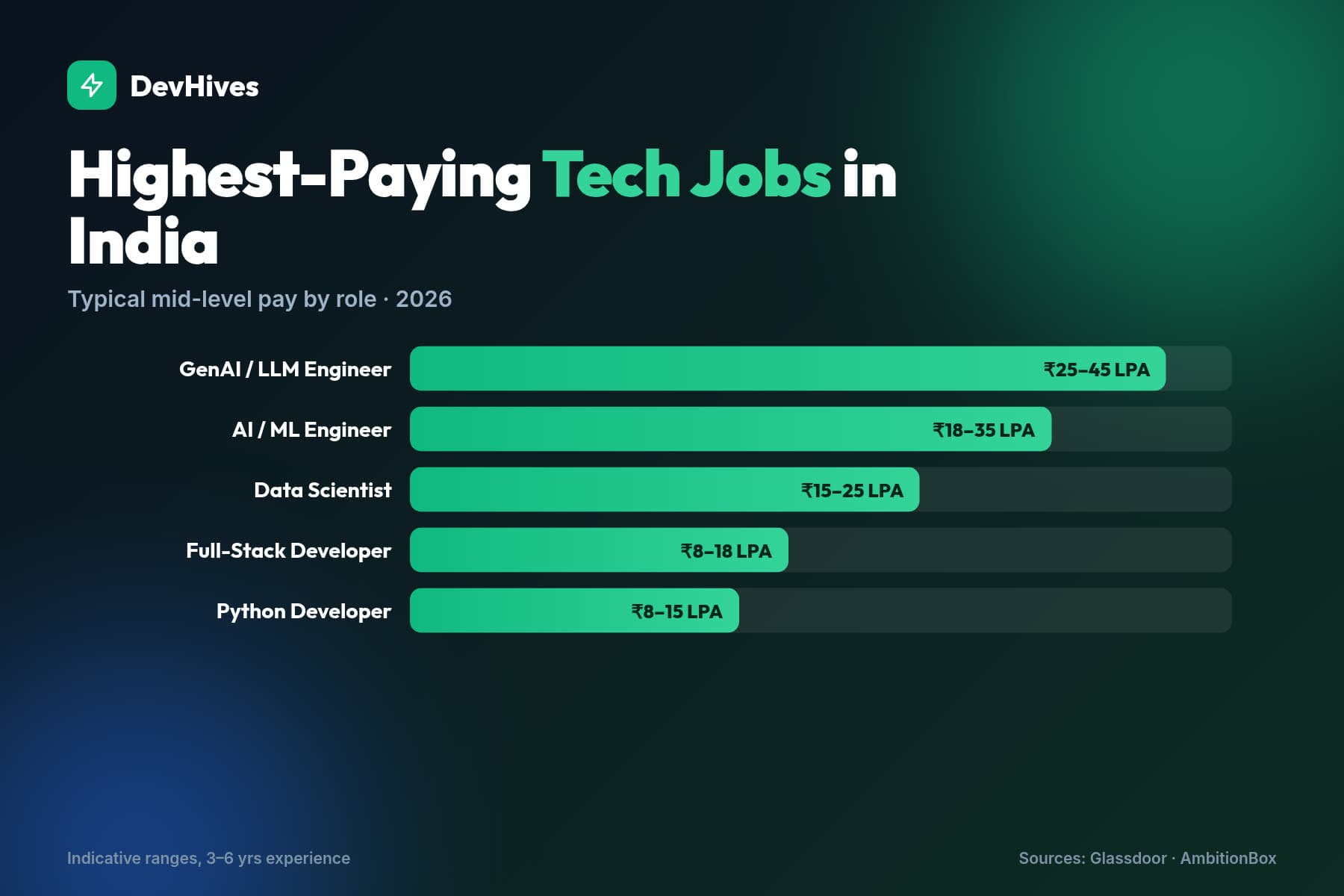
Is Software Engineering Dead in 2026? The Market Split Every Fresher Needs to Understand
India's IT fresher hiring fell from 6 lakh in FY22 to 1.2 lakh in FY25, yet 10 million new developers joined GitHub. The job is not dead—it has split into collapsing generic roles and AI-adjacent roles starving for talent.
Every few months the same question lands in my inbox: "Is software engineering dead?" In 2026 the panic feels louder because the numbers look scary. India's IT fresher hiring fell from about 6 lakh in FY22 to roughly 1.2 lakh in FY25. But the same year, India added 10 million new developers on GitHub. Both things are true. No, software engineering is not dead. But the way you enter the field in 2026 is completely different from 2020. The job has split into generic roles that are shrinking and AI roles that are desperate for people.
What actually changed in 2026 hiring
The entry-level market split into generic roles, which shrank, and AI-adjacent roles, which grew sharply. On the Indian side, IT fresher hiring peaked at about 6 lakh in FY22 and fell to roughly 1.2 lakh in FY25, according to AI Academia's analysis of fresher hiring trends. On the US side, entry-level generalist software engineering roles declined 25% from their 2023 peak, while AI/ML postings grew 163% in 2024-2025 and another 74% in 2026, per FinalRound AI's job market report.
| Metric | Recent trend | What it means |
|---|---|---|
| India IT fresher hiring volume | ~6 lakh (FY22) to ~1.2 lakh (FY25) | Mass hiring is collapsing |
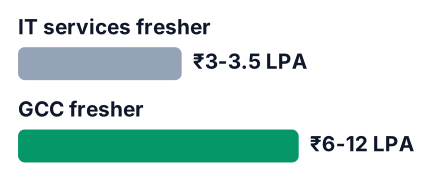
| Entry-level IT salaries (India) | Static at ₹3-3.5 LPA | No growth in generic pay |
The numbers come from AI Academia and FinalRound AI. The shape of the market is not one graph declining. It is two graphs moving in opposite directions.
The panic is real, but it is not the whole story
The collapse in mass hiring is real, but the number of developers in India is growing faster than almost anywhere else. India now has 32 million developers on GitHub, the second largest developer population after the US, and it added 10.08 million new developers in the past year, a 46% growth rate compared to the US's 37%, according to digit.in's coverage of GitHub Octoverse 2026.
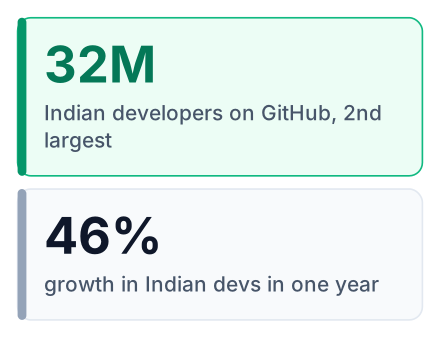
GitHub developer growth, past year
India: +10.08 million developers (+46%)
US: +37% growth
Projected by 2030: India 57.5M vs US 54.7M
People do not learn to code in the millions because the profession is dying. They do it because the profession is changing. All those new developers are not learning Java for the bench. They are learning to build with AI. And the current AI models are not good enough to replace them yet, as SWE-bench shows. The change is not complete: SWE-bench's leaderboard shows AI models still resolve only about 65% of real GitHub issues on the Verified set. That means about a third of real-world bugs and features still defeat the best AI. Engineers are not replaced yet; they are augmented.
Which roles are collapsing, and which are starving for talent
Generic entry-level coding roles are collapsing; AI/ML, LLM integration, and RAG roles are starving for talent. AI/ML engineers face a 63% talent shortage with over 500,000 open roles, per FinalRound AI. Frontend is the most exposed area, with AI handling 35-50% of routine React, CSS, and JavaScript work. Meanwhile, candidates with LLM integration and RAG skills see 3-5x higher callback rates.
India's top five IT companies tell the same story. They went from about 2.7 lakh net additions in FY22 to -70,000 in FY24, then a modest +9,500 in FY25, according to AI Academia. TCS, Infosys, Wipro, and HCLTech combined cut headcount by more than 42,000 over two years. Wipro trimmed its fresher hiring plan from 10,000-12,000 to 7,500-8,000 for FY26.
The collapse is concentrated in one place: the generic batched-hiring model where a thousand freshers join, sit on the bench, and wait for a project. That model is gone. The bench itself has shrunk from 80-90 days to 30-40 days, so a fresher must be productive almost immediately. That means your batch-mates who joined TCS in 2023 are now on the bench, and the 2026 batch is smaller.
Entry-level salaries are not growing, but the market is not dead
Entry-level IT salaries in India are static at ₹3-3.5 LPA, but the US Bureau of Labor Statistics still projects 10% software developer growth from 2025 to 2035, a rise from 1,905,400 to 2,090,800 jobs, cited in FinalRound AI's market report.
US software developer jobs (BLS projection)
2025: 1,905,400 jobs
2035: 2,090,800 jobs (+10%)
The stagnation is in starting pay, not in the profession's existence. A static ₹3-3.5 LPA entry salary from AI Academia tells you supply outstrips demand at the generic level. But a 10% US growth projection tells you the occupation itself is expanding. Both facts coexist. The market is not dead; it is picky. A static Indian salary means you are competing against thousands for a generic seat. A growing US market means companies are hiring for skills that are scarce everywhere. The same skill that gets you a US interview will also get you a higher Indian GCC salary.
What actually gets a fresher a shortlist in 2026
AI skills like LLM integration, RAG, and prompt engineering get 3-5x higher callback rates; generic Java and SQL alone no longer stand out. The data from FinalRound AI is direct: a candidate who can connect an LLM to a company's data is worth several times more than one who can write another CRUD API.
Pick one AI skill
Choose LLM integration or RAG. Both have the highest callback rates.
Build a project with it
Make a chatbot that answers questions from your college's syllabus PDFs (RAG means the chatbot reads your syllabus PDFs and answers from them, instead of making things up), or a tool that summarizes your lecture notes.
Put it on GitHub
A link to a working project beats a resume line. Recruiters check both.
Bench time in Indian IT has shrunk to 30-40 days, so a fresher gets weeks, not a quarter, to become productive. A project already on GitHub proves you can be productive on day one. That is the single strongest signal a fresher can send.
If you are unsure where to start, the AI/ML path has its own ground floor. Our guide on becoming an AI/ML engineer after 12th in India or the US covers the first steps.
The "is software engineering dead in 5 years" question
In five years, software engineering will not be dead, but the work will be more about directing AI than writing routine code. The SWE-bench Verified leaderboard shows AI resolving about 65% of real GitHub issues. That number will climb, but it will not hit 100%. Someone must decide what to build, review what AI produces, and fix the cases AI gets wrong.
The role shifts from writing code to reviewing, integrating, and orchestrating AI. A fresher who learns to read code critically and to structure problems for AI will be more valuable, not less. The Stack Overflow Developer Survey has tracked developer sentiment through every wave of tooling, and the pattern is consistent: tools change the work, they do not erase the worker.
Open your laptop tonight, sign up for a free OpenAI API key, and build a bot that answers questions from your own lecture notes. Do not wait for a course. Do it this week. That is the single most direct path to a shortlist in 2026. For a fuller picture of what the profession now pays, our 2026 India salary guide breaks down the bands by role and experience.