Gemini 4 Neon vs Flash 3.8: Which One Should Students Pay For?
Gemini 4 Neon launched at $3 per million input tokens, four times Flash 3.8's promo price. Here's how to decide when the expensive model is worth it and when it's just wasted money.
Gemini 3.8 Flash costs $0.75 per million input tokens until December 31. Gemini 4 Neon, launched on November 18, 2026, costs $3 per million input tokens. A student with a small budget has a real question: is a model that costs 4 times as much worth using for daily coding?
Use Gemini 3.8 Flash for cheap, high-volume coding help, and switch to Gemini 4 Neon when a hard, multi-file task keeps failing. Neon is not Flash-priced at $3/$15 per million tokens. It is a new middle option below the $4/$20 flagship models, with a 1M-token context and very cheap cached input. One limit: I found no Flash 3.8 benchmark scores, so the quality gap between the two is untested. This post compares price and gives you a test you can run yourself.
Gemini 4 Neon launched Nov 18 at $3 input and $15 output
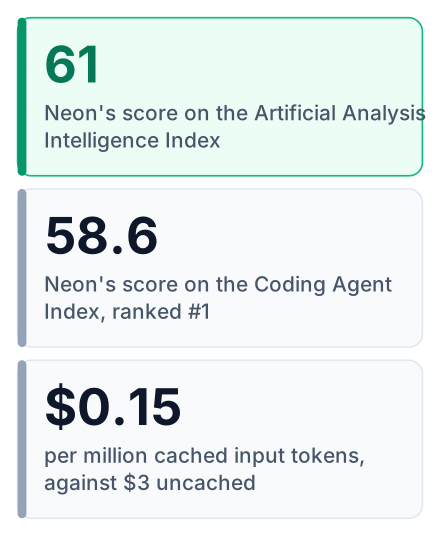
Google DeepMind released Neon on November 18, 2026, with a 1M-token context and $0.15 per million cached input tokens, according to its launch post. That cached price is a 95% discount on normal input. A "cached" token is text the model has already seen in your session, like the same project files sent again on the next request.
Neon is rolling out today in four places, per Google's announcement:
- The Gemini API and Google AI Studio, where you pay per token.
- Antigravity, Google's coding tool, on paid AI Pro and Ultra plans.
- The Gemini app, also for Pro and Ultra subscribers.
- Gemini for business.
If you are already paying for the flagship through OpenRouter, my post on Gemini 4 Carbon pricing for projects covers that side of the family.
Flash 3.8 costs a quarter of Neon and has a free tier
Flash 3.8 costs $0.75/$3.75 through December 31, then $1.50/$7.50, so Neon is not a Flash-priced model. Flash also has a free tier, which Opslyft's pricing page lists alongside rupee figures for Indian readers.
| Model | Price now (input/output per million) | Price later | Free tier |
|---|---|---|---|
| Gemini 3.8 Flash | $0.75 / $3.75 to Dec 31 | $1.50 / $7.50 | Yes |
| Gemini 4 Neon | $3 / $15, cached input $0.15 | No change announced | Not confirmed, check AI Studio before testing |
| Gemini 4 Carbon and Argon | $2 / $10 to Nov 30 | $4 / $20 from Dec 1 | Not listed in my sources |
Read the table from December onward. Neon becomes the middle rung: cheaper than the flagship, pricier than Flash. For this month only, Carbon is cheaper than Neon, which is a strange short window. For an even smaller budget, I looked at Gemini 4 Hydrogen's price for students.
What a real coding session costs on each model
In a long coding session that re-sends the same files, cached input at $0.15 per million tokens keeps Neon's bill lower than its headline price suggests.
Say you point a coding agent at your final-year project. The repo is about two hundred thousand tokens. The agent loops twenty times, sending the whole repo each step, and writes about two thousand tokens of output per step. That is four million input tokens and forty thousand output tokens in total.
| Model and price | Input cost | Output cost | Session total |
|---|---|---|---|
| Flash 3.8, promo, no caching assumed ($0.75/$3.75) | $3.00 | $0.15 | $3.15 |
| Flash 3.8, after Dec 31, no caching assumed ($1.50/$7.50) | $6.00 | $0.30 | $6.30 |
| Neon, no caching ($3/$15) | $12.00 | $0.60 | $12.60 |
| Flash 3.8, with caching | Unknown | Unknown | Unknown, no cached Flash price in my sources |
| Neon, cached after step one ($0.15 cached) | $0.60 (200K tokens at $3) + $0.57 (3.8M cached tokens at $0.15) | $0.60 | $1.77 |
For budgeting, $5 buys about one and a half Flash promo sessions at $3.15 each, or about two and a half cached Neon sessions at $1.77 each, but under half of one uncached Neon session at $12.60. If you pay from India, your card converts these dollar prices at its own exchange rate, and the Opslyft pricing page lists rupee figures alongside its prices.
Real usage sits between the extremes. OpenRouter reports that the average input token on Neon cost $0.4791 per million once cached and uncached tokens are blended, against the $3 sticker price, which suggests many of its users already hit the cache. The lesson for you: check whether your tool reuses context before you judge a model by its sticker price.
Neon's coding scores show where the extra money goes
Neon ranks #1 on the Coding Agent Index at 58.6 and scores 61 on the Intelligence Index, just above Carbon at 60, as the Artificial Analysis leaderboard shows.
An index is one combined score built from many tests, so you can compare models with a single number. A cost-per-task figure is what it costs, in dollars, for the model to finish the whole test set once. It includes all the thinking tokens, so it is closer to a real bill than the per-token price.
- Terminal-Bench 4.1: 65.2% at the default "high" thinking level (how long the model reasons before it answers). This tests work in a command line.
- FrontierCode 2.0: 46.2% at default high.
- Cost claim: Google says Neon at default high costs 32% less per task than Carbon, and 50–80% less than top competing frontier models.
The leaderboard tells a slightly different story at maximum effort. Neon Xhigh costs $6.44 per task, against $4.90 for Carbon High, and Claude Fable 5.2 Max still leads overall at 65. Neon is first on coding-agent tests, while Claude Fable 5.2 Max is first on the overall Intelligence Index. Google's saving applies at the default setting, so do not turn thinking up to the maximum unless you need it. For OpenAI's options, see my post on GPT-6.2 Astra and Sol prices.
Flash for triage, Neon for hard multi-file work
Flash suits quick questions, small fixes and high-volume tasks, while Neon suits changes across many files that would otherwise need the $4/$20 flagship (pricing). Think of Flash as the first person you ask, and Neon as the senior you call when that fails.
Pros of Flash 3.8
- Cheap enough to paste every error message you hit.
- Fine for writing unit tests for one function.
- A free tier for practice and coursework.
Cons of Flash 3.8
- May need several retries on hard multi-file tasks, and each retry costs you time.
- Its price doubles after the promo ends.
Pros of Gemini 4 Neon
- Top of the coding-agent ranking, so it suits refactoring a college project across several files.
- Cached input makes long agent sessions cheap.
Cons of Gemini 4 Neon
- No free tier listed, so every test costs money.
- Wasteful for a one-line question.
My opinion: do not make Neon your default. Most student coding is small, and paying more for a question Flash answers correctly is just lost money.
Do fewer retries make Neon cheaper than Flash?
At the promo prices Neon costs exactly 4 times as much per token, so it only wins if it saves about 4 Flash attempts per task. Both ratios match: $0.75 against $3 for input, and $3.75 against $15 for output.
After December 31, Flash moves to $1.50/$7.50, and the gap drops to 2x. Neon then needs to save only about two Flash attempts to break even on tokens.
Tokens are not the only cost. Each failed attempt also costs your time: reading wrong code, testing it, and explaining the problem again. For a student near a deadline, that time matters more than a few cents.
Here is my own rule of thumb, not a measured result:
- Start every task on Flash.
- If Flash fails, rephrase once and give it the error output.
- After two failed tries on the same task, move it to Neon.
- If you call the API from code, route tasks automatically. My post on a routing classifier to cut Gemini API cost shows how.
Try Neon today in AI Studio or on OpenRouter
You can test Neon on one of your own failed tasks today for the price of a few cents, without changing your tools. On OpenRouter, it is served through Google Vertex and AI Studio at $3/$15, with up to 65,536 completion tokens per response.
Open an account
Sign in to Google AI Studio, or to OpenRouter if you already use it for other models.
Select Gemini 4 Neon
Pick it from the model list. Leave thinking at the default level.
Paste a task Flash failed on
Use the same prompt and the same files, so the test is fair.
Compare attempts and cost
Note how many tries each model needed and what the usage page says you spent.
The Gemini app and Antigravity need a paid Pro or Ultra plan to use Neon, per Google's announcement. The API route is the cheaper way to run one test.
Your next step: pick one coding task that Flash 3.8 failed on twice, run it once on Gemini 4 Neon in AI Studio, and compare the cost and the number of retries before deciding which model to use every day.